_Gemeente Rotterdam
As a UX designer, I focused on creating a solution that helps young people with autism manage municipal matters independently and without stress. Our research revealed that this group struggles mainly with online appointment booking and physically collecting documents such as passports. Overstimulation, difficulty with direct communication, and unclear steps were the biggest stumbling blocks.
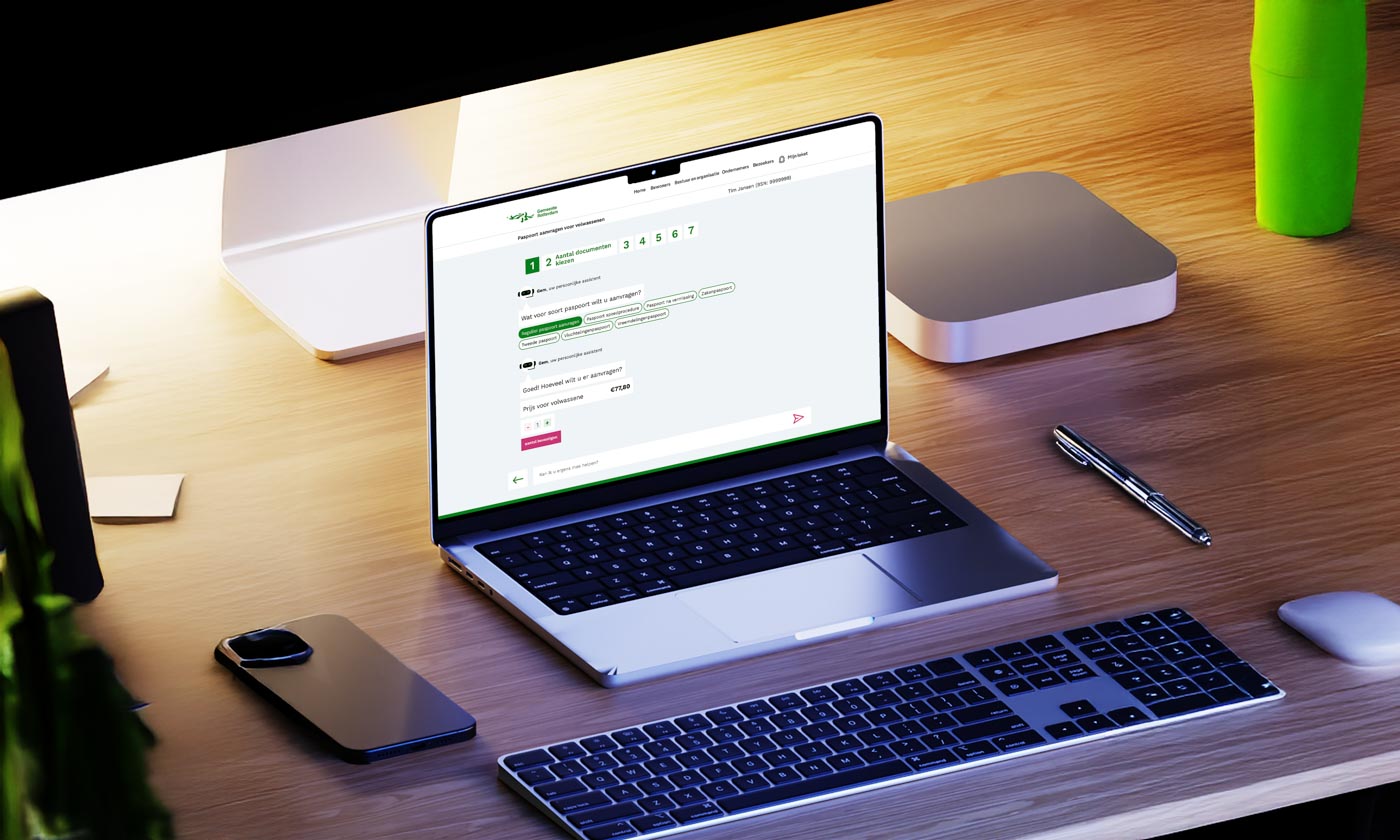
Therefore, our concept focused on predictability, clarity, and a low-stimulation environment. Ultimately, we developed a prototype in which Gem acts as a digital guest assistant. Through the website, users can schedule appointments with Gem’s support, after which they can pick up their documents at a touchscreen-enabled kiosk. This minimizes social contact while maintaining the user’s independence.


Within the project, I held two key roles: UX designer and team captain. In the research phase, I conducted a Day in the Life study to better understand the daily life and challenges of young people with autism. I also contributed to developing insight cards and design guidelines, which served as the foundation during the design sprint.
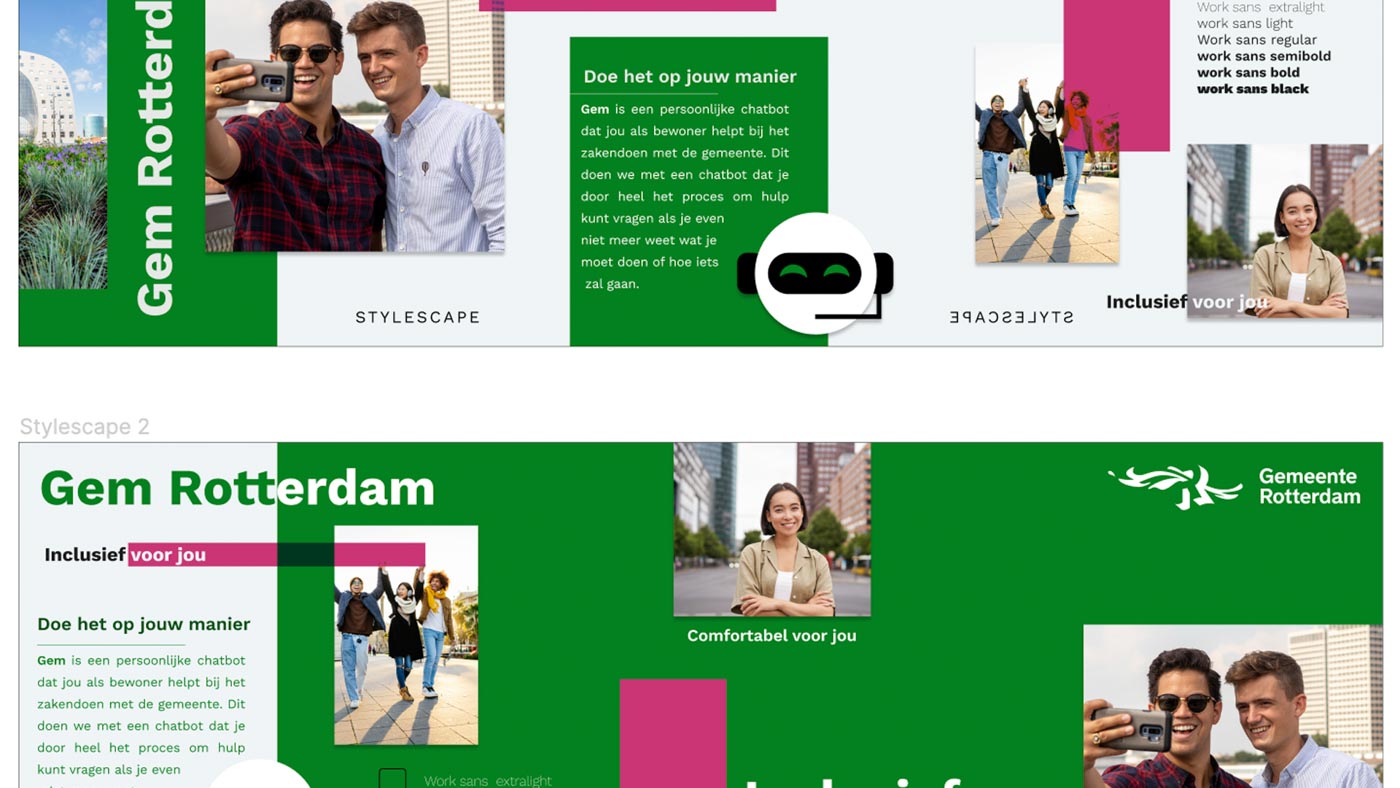
In the design phase, I worked on creating wireframes, developing variations of the digital application flow, and visually designing stylescapes. Together with my teammates, I tested multiple iterations of the prototype through co-creation sessions, preference tests, and usability tests.
As team captain, I was responsible for coordinating the process. Initially, this was challenging, especially when it came to task delegation. I found it difficult to decide who should do what and doubted whether I was being too directive or too passive. Through feedback sessions, including the use of the Vroemen Wheel and a SWOT analysis within the team, I learned to better understand each team member’s strengths and weaknesses. This helped me assign tasks more effectively and ensured smoother collaboration.

What I learned from this project is that clear guidelines are important not only for the user but also for team collaboration. The design guidelines we created helped us stay focused on the target group, while methods like the Vroemen Wheel made me realize how essential open communication and feedback sessions are within a multidisciplinary team. This insight did not come automatically but emerged as I, in my role as team captain, encountered the limits of my position when dividing tasks.
I also realized that iterative work – creating multiple design versions and continuously testing them with the target group – is crucial to developing a solution that truly meets their needs. Each test provided new insights that improved our prototype and also ensured that the target group felt heard and taken seriously.
Case Specs
Rol:
User Researcher, Visual Designer
Tijdlijn:
20 weken
Tools:
Figma, Notion, Miro, ChatGPT, Insight Wall
Expertise: